Budget
Cheap stair runner solutions
How to achieve a high-end staircase look on a budget, from material selection and DIY fitting to choosing cost-effective synthetic alternatives to wool.
Written by the StairRunner.co editorial team · Updated 4 September 2026
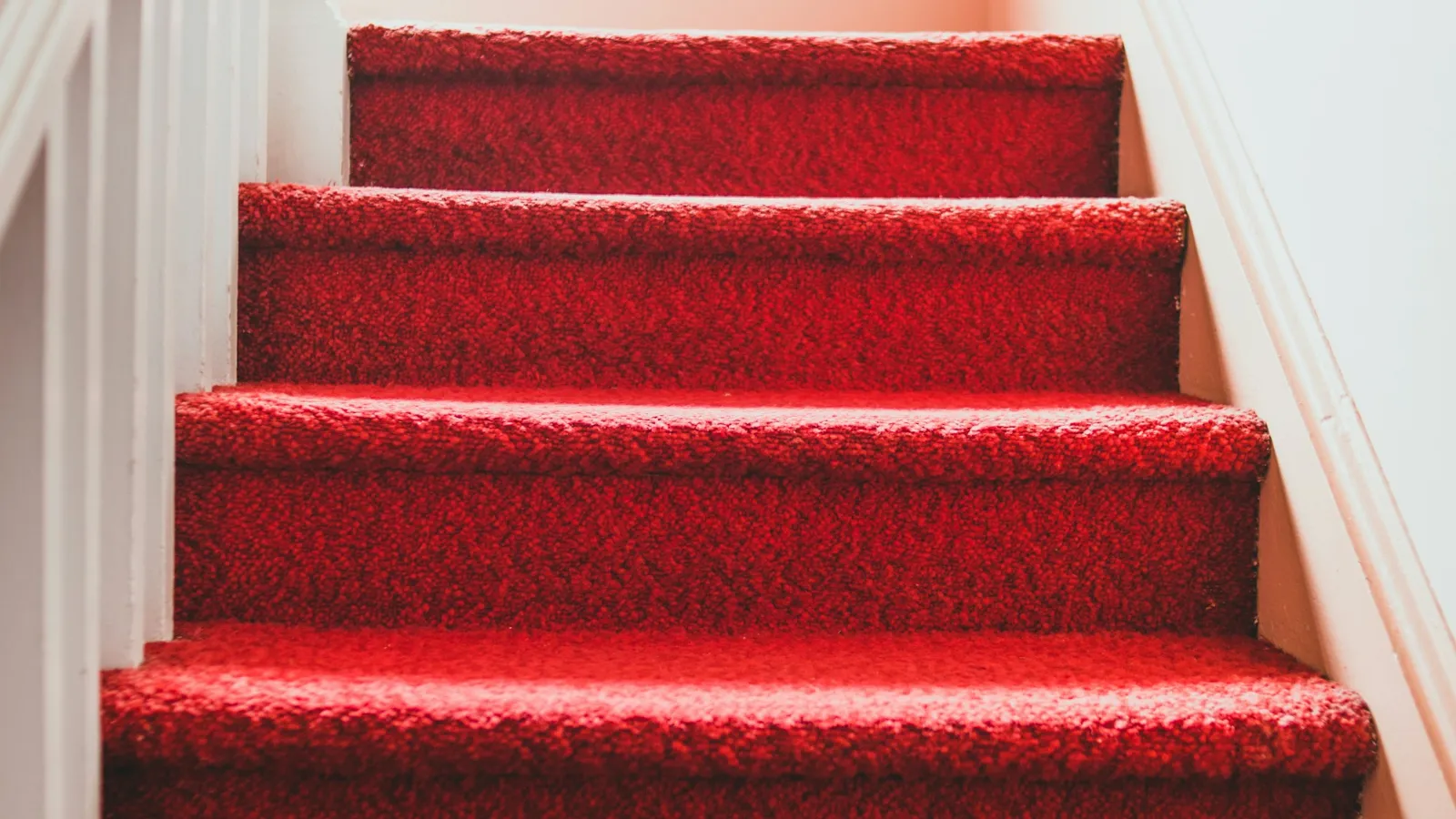
A low budget does not have to mean a cheap-looking staircase. What makes a runner look expensive is mostly the fit, the proportions and a tight, dense surface — none of which depend on paying for the most expensive fibre. This guide shows where you can save safely and where saving costs you more later.
Where the money goes
| Cost | How to save | Don't skimp on |
|---|---|---|
| Runner material | Synthetic or blend, plain or simple pattern, narrower width | Density and a tight pile |
| Underlay pads | Buy stair pads rather than room underlay offcuts | Having a pad on every tread |
| Fitting | Fit it yourself on a straight flight | Professional fitting on winders and landing turns |
| Rods and hardware | Leave them out, or add them later | Secure fixing underneath |
| Binding | Buy a finished runner so no binding is needed | Sealed edges if you cut from broadloom |
Material trade-offs: polypropylene vs wool
Polypropylene is usually the cheapest option and has real strengths: it is stain resistant, colourfast and easy to clean. Its weakness is resilience — the pile flattens on the nosings sooner than wool or nylon, especially in a deep pile. Choose it in a low, dense loop or flat-weave and it will look good for longer. A wool blend (often 80% wool, 20% synthetic) costs more but recovers better underfoot. Nylon sits between the two and is very hard-wearing. Compare them in the materials guide.
Why narrow widths are more cost-effective
Runners are priced by length, but the width you choose sets which price band you pay. A slightly narrower runner with wider margins costs less, shows more of the timber, and often looks more considered. Just keep the margins even and at least 3 in (7–8 cm) each side, or the runner starts to look undersized. The width guide explains the proportions.
The impact of pattern complexity on price
Patterns cost more twice: the material is often dearer, and matching the pattern from step to step wastes length. A plain runner, a simple stripe or a self-coloured texture avoids both. Texture — a ribbed, herringbone or bouclé weave — gives interest without pattern-matching waste.
DIY vs professional installation costs
On a straight flight with no landing turn, fitting a runner yourself is a realistic weekend job and saves the whole labour cost. Winders, turns, Hollywood fitting and pattern matching are where professional fitting earns its fee; a mistake there can waste more material than the fitter would have charged. See the DIY guide before you decide.
Using carpet remnants and offcuts
A broadloom remnant can be cut into a runner and bound along both edges. It can be very good value if the remnant is long enough for your whole flight in one piece. Check two things before you buy: that the length really covers your measured run plus waste, and the cost of binding, which can cancel out the saving on a short remnant.
The hidden costs: underlay and fixings
Budget for pads, staples or tack strip, and a stair tool if you are fitting yourself. Pads are the one item not to drop: without them the runner wears through faster on the nosings and the stairs are noisier.
Avoiding the false economy of low-grade synthetics
The cheapest runners often have a thin, open pile you can see the backing through. On stairs that backing shows on every nosing within months, which is called "grinning". Fold a sample over a table edge: if you can see the backing, keep looking. A dense runner at the same price per foot will look better for years longer.
Aesthetic tricks for a premium look
- Keep the margins generous and exactly even on every step.
- Choose a tight, low pile — it reads as tailored rather than cosy.
- Paint or refinish the visible margins and risers before fitting.
- Pick one strong colour or a simple stripe rather than a busy pattern.
- Finish the top and bottom ends neatly; that is where cheap fits show.
Buying by the foot vs full rolls
Buying a finished runner by the foot means you pay only for the length you need and avoid binding. Buying from a roll can be cheaper per foot but may leave you paying for a minimum length. Work out your length first with the calculator, then compare total prices rather than prices per foot.
Maintenance strategies for cheaper fibres
Vacuum weekly, blot spills straight away, and keep a short offcut for spot repairs. A cheap runner that is looked after can outlast an expensive one that is neglected.
When to invest and when to save
Save on fibre, pattern, rods and fitting on easy flights. Spend on density, pads, and on professional fitting where the staircase is complicated. Those choices give the best result for the money.
Frequently asked questions
- What is the cheapest material for a stair runner?
- Polypropylene is generally the most affordable option. It is hard-wearing, stain-resistant, and significantly cheaper than wool or sisal while offering a similar aesthetic in many modern weaves.
- Can I use a regular hallway runner on stairs?
- Yes, provided it is securely fixed and has a suitable backing. However, standard runners are often not long enough for a full flight, so you may need multiple pieces joined at the nosings.
- Is DIY installation worth the saving?
- If you have the right tools and a straight flight, DIY can save significantly. For winders or complex landings, a professional is usually a better long-term investment to avoid wasting material.
- How can I make a cheap runner look expensive?
- Focus on the finishing. Clean, well-painted stairs, high-quality (though invisible) underlay, and precise centering can make a budget material look premium.
- Do cheap runners wear out faster?
- Low-density synthetics can flatten in the traffic lane faster than wool. Choosing a dense, low-pile construction helps mitigate this even at a lower price point.
- Should I skip the underlay to save money?
- No. Underlay is essential for safety, comfort, and longevity. A cheap runner without underlay will wear through and feel uncomfortable very quickly.
Related guides
 InstallationHow to Install a Stair RunnerWaterfall and Hollywood methods, staples versus rods, tools, sequence and quality checks.
 BuyingBest Carpet for a Stair RunnerThe specification checklist — fibre, pile, density, backing, width and pattern repeat — for stair-worthy carpet.
 CostStair Runner Cost in the UKHow a UK quote is assembled line by line, and how to compare two quotes honestly.