Design Style
Dark stair runners: Creating drama and depth
A dark stair runner is a bold architectural choice. It anchors the space, provides a sense of luxury, and can transform a standard hallway into a moody, sophisticated gallery.
Written by the StairRunner.co editorial team · Updated 4 September 2026
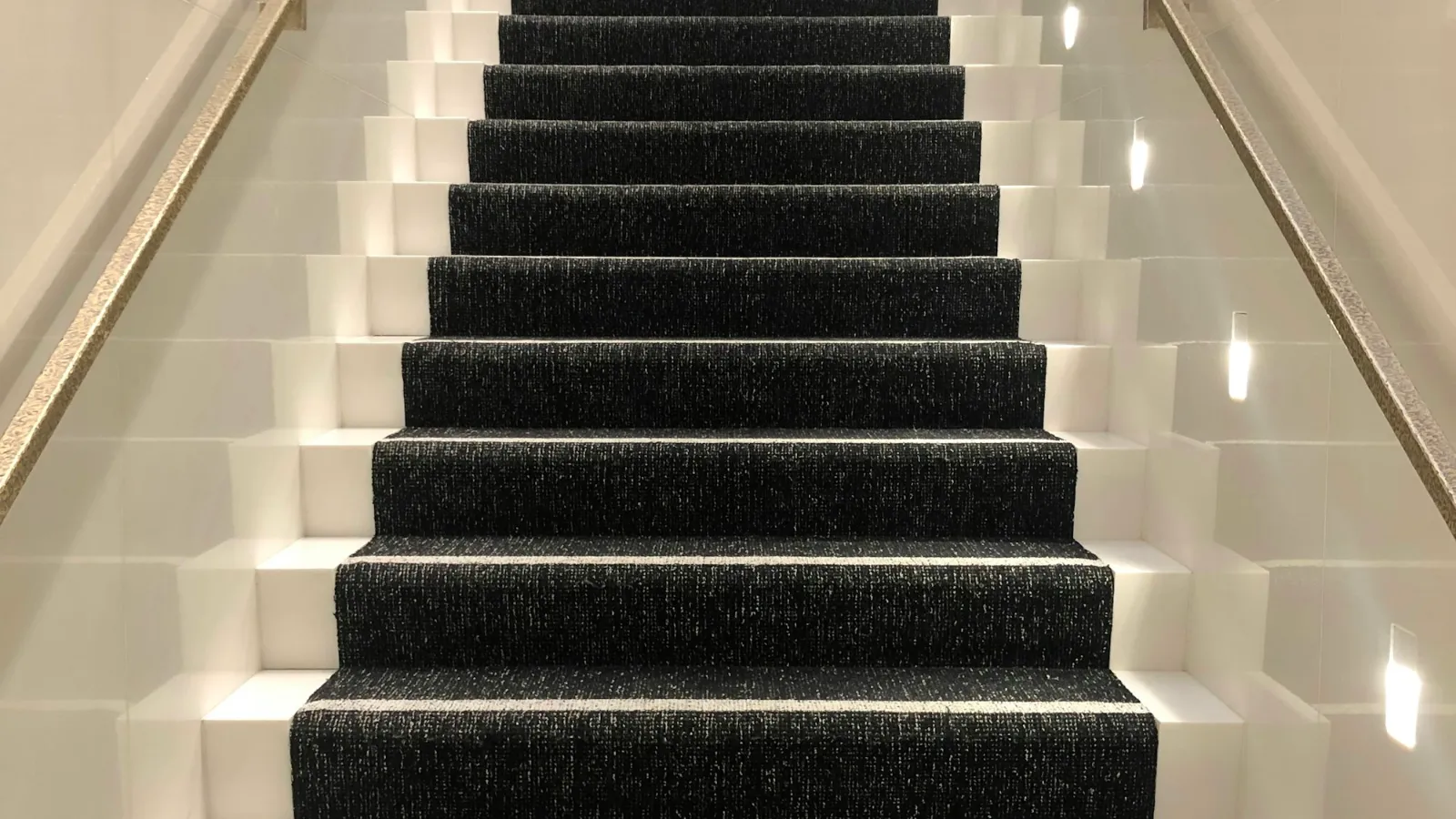
A dark runner — charcoal, navy, deep green, chocolate or near-black — gives a staircase weight and drama, and hides the everyday soil that ruins pale runners. It shows a different kind of dirt instead, and it can make a dim hallway darker still, so it needs the right setting.
What a dark runner hides, and what it shows
| Hides well | Shows clearly |
|---|---|
| Mud, grey soil, coffee and dark spills | Lint, dust, crumbs and fluff |
| Traffic lanes on the nosings | Pale pet hair |
| General wear | Bleach or cleaner marks, and fading |
Choosing the right dark
A very dark colour with a little variation — a heathered charcoal, an inky navy with a fleck, a textured deep green — looks richer and hides lint better than a flat black. Pick the shade to suit the house: navy and green feel classic, charcoal feels modern, chocolate feels warm.
Light and safety
The biggest risk with a dark runner is losing the step edges in low light. On dark timber, a dark runner can make the whole staircase read as one surface. Use contrast — painted risers, pale margins, a lighter border — and make sure the stairs are well lit at the top and bottom.
Pairings that work
- White-painted stairs: the classic, highest-contrast look.
- Pale oak: charcoal or navy for a crisp modern finish.
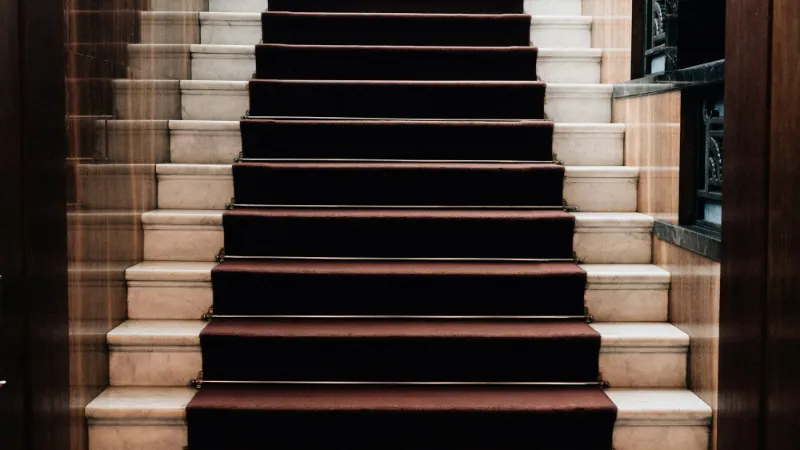
- Brass rods: glow against navy, green and black.
- Dark walls: only with good lighting, for a deliberately moody hall.
Fibres and fading
Dark dyes can fade in strong sunlight from a stair window or roof light. Solution-dyed synthetics resist fading best; good wool holds dark colour well and has a soft matte look that suits deep shades. See the materials guide.
Frequently asked questions
- Do dark stair runners show more dust?
- Yes. While dark runners are excellent at hiding mud and dark stains, they show light-coloured debris like lint, dust, and pet hair more readily than mid-tone or light carpets. Regular vacuuming is essential.
- Will a dark runner make my hallway too dark?
- It can if the walls are also dark and there is no natural light. To avoid this, pair a dark runner with light-coloured walls or ensure you have high-quality, layered lighting to illuminate the flight.
- What is the best dark colour for stairs?
- Charcoal grey and navy blue are the most popular. They offer the drama of a dark tone but are slightly more forgiving than pure black, which can look very stark and show every speck of dust.
- Should I use a contrasting border on a dark runner?
- A light-coloured border (like cream or light grey) on a dark runner can help define the edges of the steps, which is both a stylistic choice and a safety feature in low-light conditions.
- Do dark carpets fade in the sun?
- Deep pigments can fade over time if exposed to direct, harsh sunlight. If your stairs are in a very sunny spot, consider a solution-dyed synthetic which holds its colour better than surface-dyed wool.
- What finish of stair rods works best with dark runners?
- Chrome or polished nickel provides a sharp, modern contrast. Brass or antique bronze offers a warmer, more traditional and sophisticated look against dark navys and blacks.
Related guides
 CareCleaning and Caring for a Stair RunnerRoutine vacuuming, spill response by fibre type, slipping and fraying, and when to call a professional.
 DesignChoosing a Stair Runner ColourHow light, adjacent flooring, trim colour, traffic and dirt should drive the colour decision.
 DesignBlack and Dark Stair RunnersWhen very dark runners work: light, dust, lint, contrast and the designs that carry them.