Colour Guide
The comprehensive guide to green stair runners
Green is often called 'nature's neutral'. On a staircase, it provides a bridge between the living spaces and the garden, offering a sense of calm while remaining remarkably practical for high-traffic environments.
Written by the StairRunner.co editorial team · Updated 4 September 2026
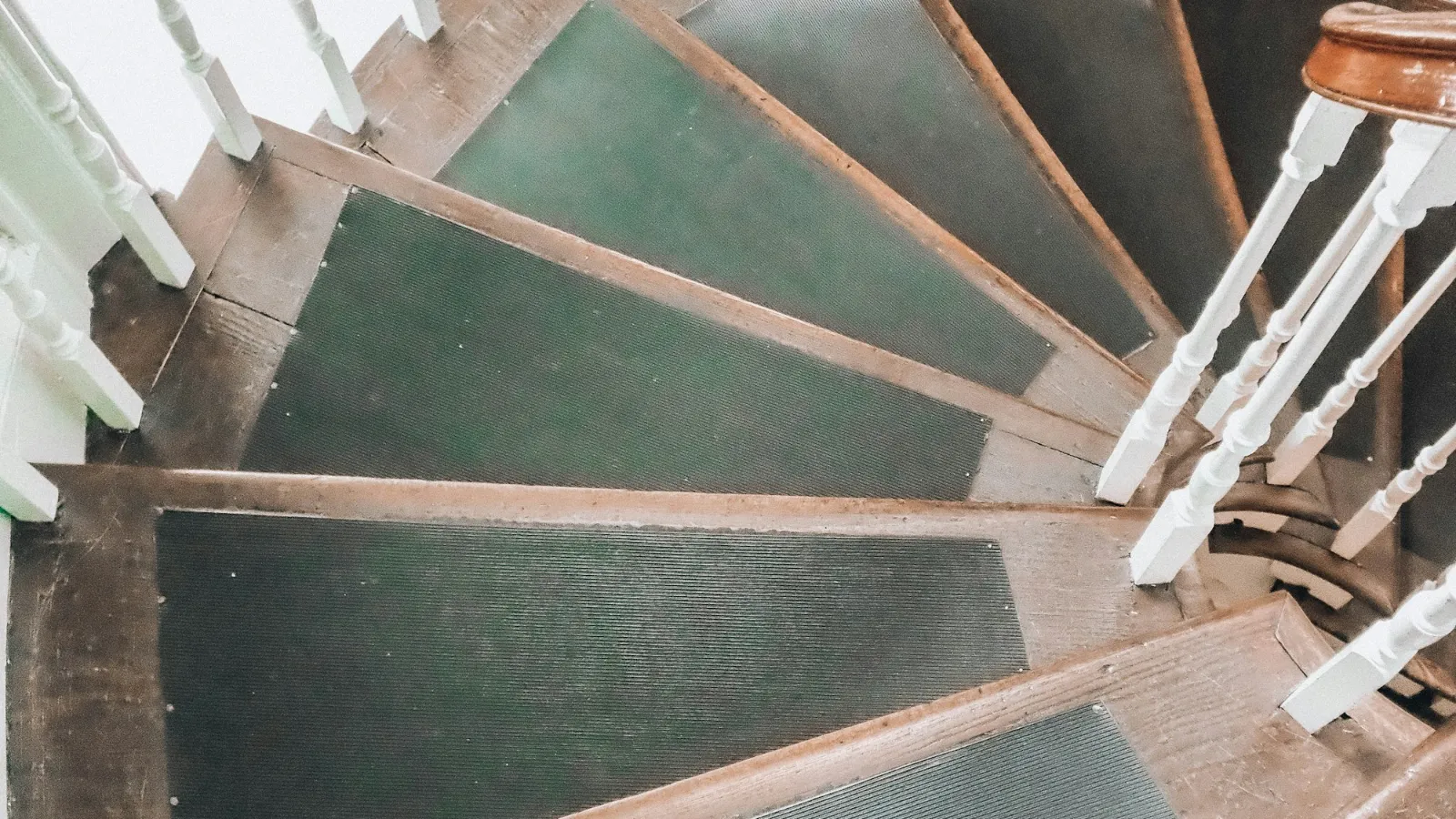
Green is the colour that has done most to move stair runners away from beige. Forest, olive, sage and emerald all bring a sense of nature indoors, and deep greens are surprisingly practical on a busy staircase.
Greens compared
| Shade | Look | Practicality |
|---|---|---|
| Forest or bottle green | Classic, rich, traditional | Hides soil very well |
| Olive or moss | Earthy, relaxed | Very forgiving |
| Sage | Soft, modern, calming | Moderate |
| Emerald | Jewel-like, luxurious | Good; a statement |
How green behaves on a staircase
Mid and dark greens hide everyday soil well because it is close in tone to the earthy colours outside. Very dark greens show lint, like any deep colour. Sage and pale greens behave more like light neutrals and need more regular cleaning.
Pairing green
- Timber: green suits warm oak and walnut particularly well.
- White paint: gives a fresh, country-house look.
- Walls: warm whites, plaster pink, ochre, or a deeper green for a tonal scheme.
- Rods: antique brass is the natural partner.
Plain or patterned?
A plain green runner with a bound edge looks tailored. Green also works well as the ground for stripes, small geometrics and traditional patterns. For something softer, try a green herringbone or a tonal stripe.
Light and fading
Greens shift with light: sage can look grey in north light, and emerald can glow under warm bulbs. Check samples in the hallway at different times. In direct sun, choose a fade-resistant fibre.
Frequently asked questions
- Does a green stair runner show dirt easily?
- Mid-to-dark greens like olive and forest are excellent at hiding organic soil and dust. Lighter shades like sage or mint are more prone to showing marks and require a higher-specification synthetic or a well-protected wool fibre.
- What wall colours pair best with a green runner?
- Green is a 'neutral of nature.' It pairs beautifully with off-whites, warm greys, and terracotta. For a heritage look, deep navy or burgundy walls create a classic contrast with a sage or olive runner.
- How does green look under artificial hallway lighting?
- Green is highly sensitive to light temperature. Warm LEDs can make olive look muddy, while cool bulbs can make sage look grey. Always test samples under both daylight and your specific evening lighting.
- Is a green runner suitable for a dark hallway?
- Yes, but choose a green with a yellow undertone (like moss) to add warmth, or a lighter sage to reflect more light. Avoid very dark forest greens in windowless halls unless you have high-quality accent lighting.
- Which timber tones work best with green?
- Oak and green are a timeless pairing. The orange-yellow warmth of oak complements the cool or earthy tones of green. Dark walnut also works well with deep forest greens for a library-style aesthetic.
Related guides
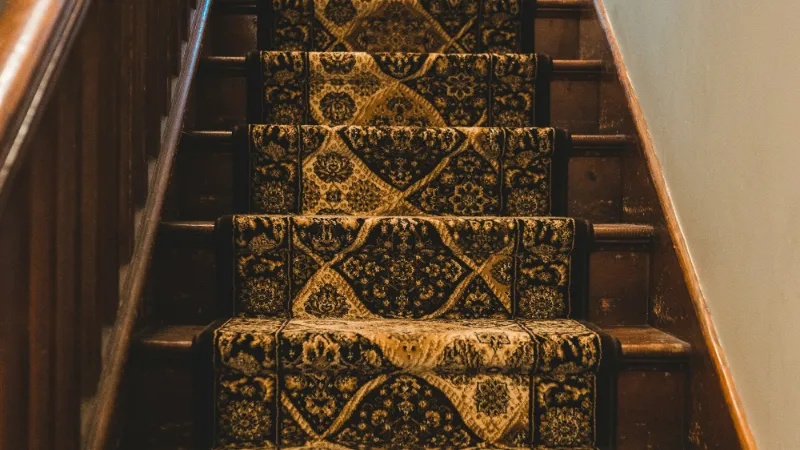 DesignStair Runner Patterns ExplainedHerringbone, chevron, stripes, plaid, geometrics and animal prints judged by how they behave on a staircase.
 DesignChoosing a Stair Runner ColourHow light, adjacent flooring, trim colour, traffic and dirt should drive the colour decision.
 MaterialsWool Stair RunnersWhy wool holds its shape on stairs: crimp, twist, blends, staining, moths, shedding and honest limitations.