Alternatives
Individual Stair Treads vs Runners
Separate treads or one continuous runner: how they compare on looks, safety, fitting, cleaning and cost.
Written by the StairRunner.co editorial team · Updated 4 September 2026
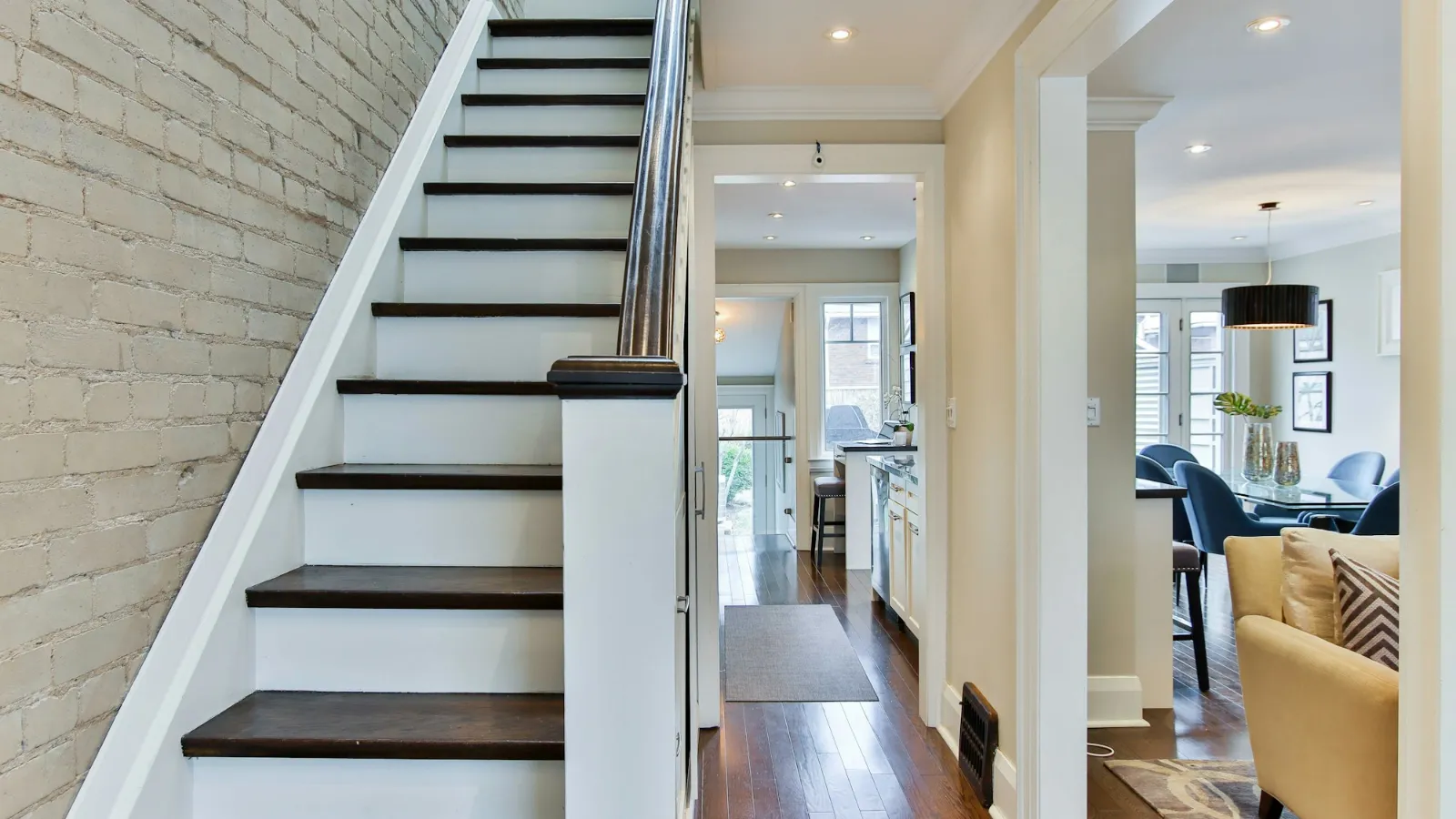
Individual stair treads are separate pieces of carpet or rug, one for each step. A runner is one continuous length running up the stairs. Both protect the stairs and give grip, but they look different, fit differently and suit different households.
Treads vs runner at a glance
| Individual treads | Stair runner | |
|---|---|---|
| Look | A series of separate mats | One continuous line up the stairs |
| Risers | Left bare | Covered |
| Fitting | Quick, usually DIY | More involved; often professional |
| Removal and cleaning | Lift one at a time | Cleaned in place |
| Replacing damage | Replace one tread | Repair or replace a section |
| Noise reduction | Good on treads; risers still hard | Better overall |
When treads make sense
- You rent, or want something you can lift without tools.
- You have pets and want to wash or replace pieces easily.
- The stairs have beautiful risers you want to show.
- You want grip on slippery treads on a modest budget.
When a runner is the better choice
- You want the tailored, continuous look of a fitted runner.
- You want to quieten the whole staircase, risers included.
- The stairs are steep or used by older people, where a fixed runner gives the most even footing.
- You want to dress the stairs with rods or a bordered design.
Safety: the issue with loose treads
The main risk with treads is movement. A tread that slides even slightly at the nosing is dangerous. Choose treads with a firm non-slip backing, ideally with a nosing wrap that hooks over the edge of the step, and fix them with the method the maker recommends. Check them regularly, especially on smooth, varnished or painted treads.
Sizing treads
Treads are usually set back slightly from the sides of the step, like a runner, with an even margin on each side. Measure the depth of the tread including the nosing, and choose a tread that covers the walking area without overhanging the edge. A bullnose bottom step usually needs a specially shaped tread or is left bare.
Materials
Treads come in the same fibres as runners — wool, nylon, polypropylene, sisal and blends — and the same rules apply: choose a dense, low pile for wear and grip. Compare fibres in the materials guide.
Cost
Treads are usually cheaper overall because they use less material and are easy to fit yourself. A runner costs more but covers the stairs completely and lasts well when fitted properly. See the cost guide for what goes into a runner quote.
Frequently asked questions
- Are stair treads safer than a runner?
- Not necessarily. A well-fitted runner fixed into every crease gives the most even footing. Treads are safe when they have a firm non-slip backing and do not move at the nosing.
- Can I fit stair treads myself?
- Yes. Treads are one of the easiest stair coverings to fit yourself, using the fixing method the maker recommends.
- Do treads cover the risers?
- No. Treads cover only the horizontal part of each step, so the risers stay visible.
- Which is cheaper, treads or a runner?
- Treads are usually cheaper overall because they use less material and are easy to fit yourself.
Related guides
 InstallationHow to Install a Stair RunnerWaterfall and Hollywood methods, staples versus rods, tools, sequence and quality checks.
 MaterialsStair Runner Materials ComparedWool, nylon, polypropylene, sisal and jute judged on stair-specific wear, comfort, cleaning and safety.
 CareCleaning and Caring for a Stair RunnerRoutine vacuuming, spill response by fibre type, slipping and fraying, and when to call a professional.