Colour Choice
White stair runners: Elegance, light, and commitment
A white stair runner is a dramatic interior choice that transforms a hallway, but it demands a different relationship with cleaning and maintenance than a neutral or patterned alternative.
Written by the StairRunner.co editorial team · Updated 4 September 2026
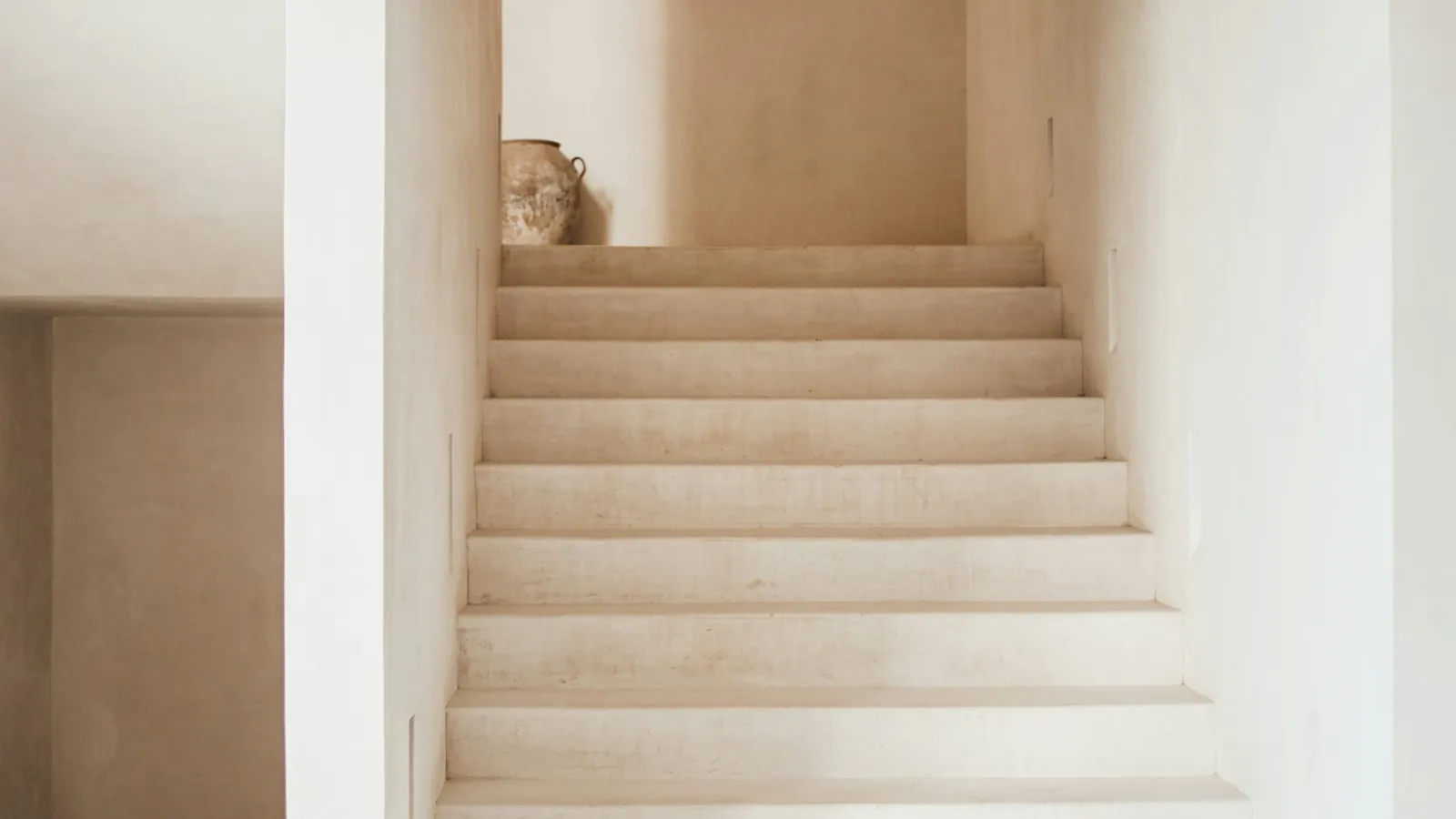
A white runner is the boldest neutral there is. On a dark stair it looks dramatic; on painted stairs it can look serene and expensive. It is also the hardest colour to keep looking good, so it works best as a considered choice for the right household rather than a default.
Is a white runner realistic?
The nosing of each step takes the most soil, and on white every mark shows. A white runner is realistic where shoes come off, pets are few or clean, and the stairs are not the main route from outside. Where that is not the case, consider off-white with a texture, or a white stripe or pattern on a darker ground, which gives the same freshness with far less upkeep.
Whites and near-whites
| Option | Look | Upkeep |
|---|---|---|
| Bright white | Crisp and graphic | Very high |
| Warm or off-white | Softer, kinder to old houses | High |
| White with texture or fleck | Natural, relaxed | Moderate |
| White pattern on dark ground | Fresh but practical | Low to moderate |
Fibres for a white runner
Solution-dyed synthetics are the most practical white, because the colour runs through the fibre and many can be cleaned with stronger products. Wool looks beautiful in white but needs careful cleaning to avoid yellowing. Washable flat-weave cotton can work on lightly used stairs. Pale natural fibres stain easily and are not a good choice for white on busy stairs.
Balancing a white runner in the hallway
A white runner looks most deliberate when white appears elsewhere — skirting boards, balusters, or a painted ceiling — so it ties into the room. Against deep wall colours like navy or green it becomes a striking strip of light leading up the stairs.
Pairing with timber and hardware
- Dark timber: the strongest contrast, and the most dramatic look.
- Painted stairs: choose a white a shade warmer or cooler than the paint so it does not look like a mismatch.
- Rods: polished nickel or chrome for crispness; black for a graphic look.
Safety
White on white-painted stairs can make steps hard to read. Use a contrasting riser, a border or a runner with a defined edge so the nosing is always visible.
Frequently asked questions
- Is a white stair runner practical for a busy home?
- White runners are high-maintenance. They show every speck of dust, lint, and soil. They are best suited for low-traffic areas, adult-only households, or those willing to commit to a rigorous cleaning schedule.
- What is the best material for a white runner?
- Wool is excellent for a crisp, natural white, but it absorbs stains. A solution-dyed synthetic (nylon or polypropylene) is more forgiving as it resists staining and can be cleaned more aggressively.
- How often will I need to clean a white runner?
- Expect to vacuum daily to keep it looking clean. Professionally cleaning the runner once or twice a year is standard to manage cumulative greying in the traffic lane.
- Will a white runner make my hallway look bigger?
- Yes, white or very pale flooring reflects light and creates an airy, expansive feeling, which can make a narrow hallway appear significantly more spacious.
- Should I use a stain protector treatment?
- Yes, always. A professional-grade stain protector is essential on white runners to buy you critical time to blot spills before they set permanently into the fibres.
Related guides
 MaterialsStair Runner Materials ComparedWool, nylon, polypropylene, sisal and jute judged on stair-specific wear, comfort, cleaning and safety.
 CareCleaning and Caring for a Stair RunnerRoutine vacuuming, spill response by fibre type, slipping and fraying, and when to call a professional.
 SafetyNon-Slip Stair Runners and Stair SafetyWhat actually makes a stair covering grippy: fitting tension, pile, pad and nosing coverage.