Style
Herringbone stair runners: a complete buying guide
Herringbone brings texture and quiet movement to a staircase without relying on strong colour, which is why it has remained a consistently popular choice across very different styles of house. Here is how to choose the right scale, fibre and fit.
Written by the StairRunner.co editorial team · Updated 4 September 2026
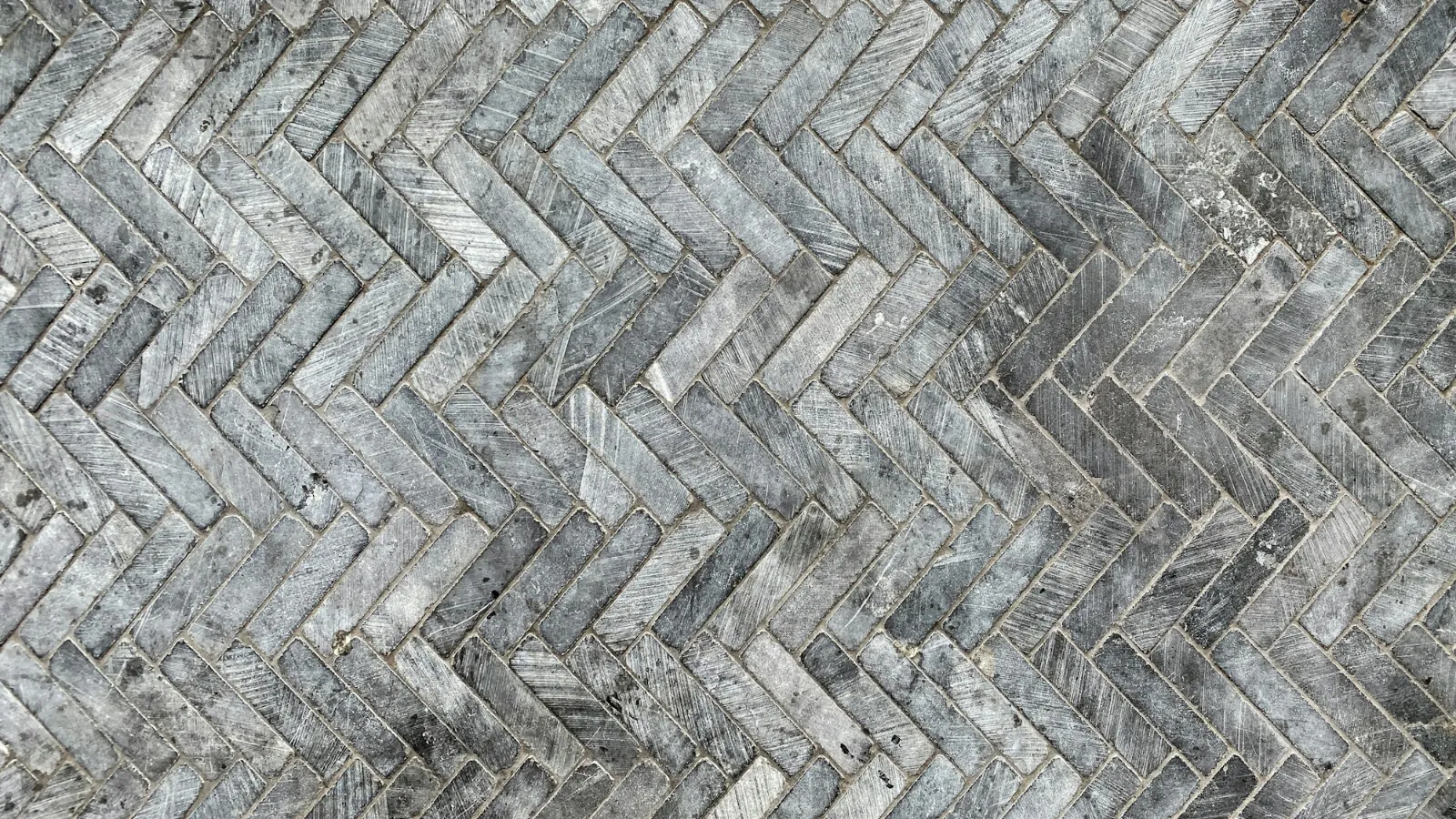
Herringbone is a woven zigzag pattern that adds texture without the busyness of a printed design. On stairs it looks tailored and quietly expensive, and it is one of the best patterns for hiding wear.
Herringbone vs chevron
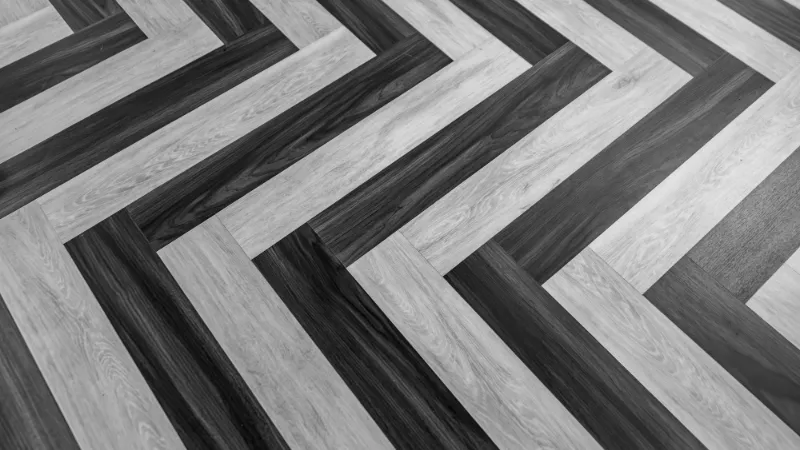
The two are often confused. In herringbone, the zigzag is made of offset rectangles, so the points are stepped. In chevron, the pieces meet in a clean point. Herringbone reads as softer and more textured; chevron reads as bolder and more graphic. See chevron runners.
Herringbone options
| Option | Look | Notes |
|---|---|---|
| Tonal wool herringbone | Subtle, luxurious | The most popular choice |
| Natural fibre herringbone | Textured, rustic | Sisal, jute or wool-sisal; clean dry |
| Two-colour herringbone | Bolder pattern | More pattern-matching care |
| Herringbone with border | Tailored and defined | Helps step edges read |
Why it suits stairs
The texture breaks up light, so marks, flattened pile and soiling on the nosings are less visible than on a smooth runner. The pattern is small and regular, so it does not need precise matching from step to step the way stripes do.
Direction
Herringbone has a direction. Decide whether the points should run up or down the stairs and make sure the whole runner is fitted the same way. Most people prefer the points to run up the flight.
Where it works
- Modern homes, in grey, charcoal or oatmeal.
- Period homes, in wool with a bound edge.
- Scandinavian and minimal schemes, as the only pattern in the hall.
Frequently asked questions
- What is the difference between herringbone and chevron?
- Herringbone is made from short rectangular blocks laid at an angle so they interlock in a broken zigzag, with a visible offset between rows. Chevron is continuous, with each strip mitred to meet its neighbour at a point, producing an unbroken V shape. Herringbone has more texture and visual movement; chevron looks cleaner and more graphic.
- Does herringbone work on a narrow staircase?
- Yes, provided the scale of the weave is chosen carefully. A fine herringbone weave suits a narrow flight well, since the pattern repeat is small enough to sit comfortably within the tread width. A very large-scale herringbone can look cramped or cut off awkwardly on a narrow runner.
- Is herringbone harder to fit than a plain runner?
- It takes more care, mainly around keeping the pattern's angle consistent as it turns corners, winders or a half-landing, but a competent fitter manages this routinely. Ask to see examples of a fitter's previous herringbone work on stairs specifically, since a flat-floor herringbone installation does not involve the same challenges.
- What fibre is best for a herringbone stair runner?
- Wool is the traditional choice and shows the woven texture of herringbone particularly well, with a natural depth of colour in each block. Wool-blend and solution-dyed synthetic options are also available and can offer a similar visual effect with different durability and budget trade-offs.
- Can herringbone be used with a border, or does it look too busy?
- A plain, contrasting border generally works well with herringbone, since the border gives the eye a clean edge and the busier woven pattern a defined frame. A second patterned border alongside a herringbone field usually is competing for the same visual attention and tends to look overworked.
- Does herringbone show wear differently to a plain weave?
- The broken, textured surface of herringbone disguises early wear and light soiling better than a flat, solid colour of the same fibre, since the pattern's own texture already breaks up the light reflecting off the surface. Wear will still show eventually in the centre of the traffic lane, but later and less obviously than on a plain runner.
Related guides
 InstallationHow to Install a Stair RunnerWaterfall and Hollywood methods, staples versus rods, tools, sequence and quality checks.
 ComparisonsWool vs Synthetic Stair RunnersWool, nylon, polyester and polypropylene compared on stair-specific wear, cleaning, comfort and price.
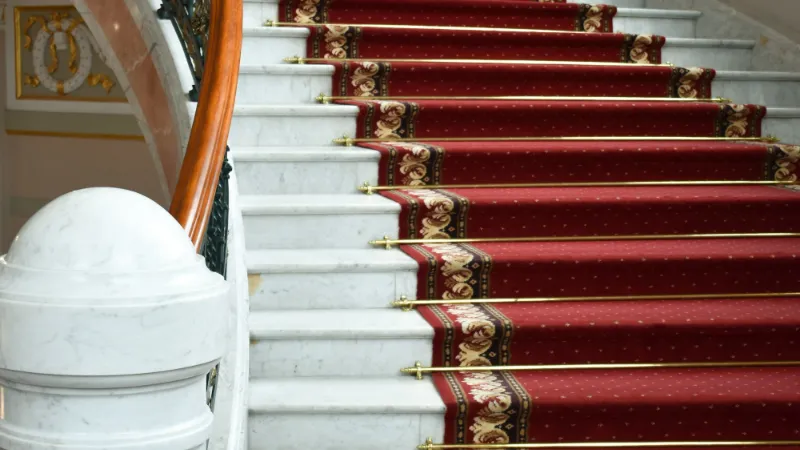 DesignBordered Stair Runners: Design & Fitting GuideA complete guide to bordered stair runners, covering whipped vs taped edges, width ratios, winder mitring, and how to choose the right contrast for your hallway.
 DesignChevron Stair Runner Ideas & Fitting GuideMaster chevron patterns on stairs: how to align points, manage winders, choose scale, and ensure a seamless look from top to bottom.